10 Best Islands in Thailand for Every Type of Traveler
Key takeaways
- The best islands in Thailand split into two coasts with opposite rainy seasons, so one side is almost always in good shape.
- Choose Phuket or Koh Samui for easy family trips, Koh Tao for diving, and Koh Phi Phi or Koh Phangan for nightlife.
- The Andaman coast (Phuket, Phi Phi, Krabi) is best from November to April; the Gulf coast (Samui, Phangan, Tao) peaks from May to September.
- Most islands are reached by ferry or speedboat from mainland piers; book combined air-and-boat tickets for the smoothest transfers.
- Thailand drew about 33 million foreign visitors in 2025, so popular islands get busy in high season; book ferries and rooms early.
The best islands in Thailand fall into two groups: the Andaman coast in the west, with dramatic limestone cliffs around Phuket and Phi Phi, and the Gulf coast in the east, home to Koh Samui and the party beaches of Koh Phangan. Pick your island by what you want from the trip, then match it to the right season, and you will skip the rain and the crowds that catch most first-time visitors.
Thailand welcomed about 33 million foreign tourists in 2025, so the famous beaches get busy in high season (Nation Thailand, January 2026). The ten islands below are sorted by traveler type, from families and divers to partygoers and people who just want a hammock and silence.
Party Islands Versus Quiet Hideaways
If you want nightlife, head to Koh Phangan or Koh Phi Phi. If you want quiet, choose Koh Lanta or Koh Yao Noi. Thailand's islands cover both extremes, and the biggest planning mistake is booking the wrong mood for your trip.
Koh Phangan hosts the famous Full Moon Party, where thousands of travelers gather on Haad Rin beach each month. Koh Phi Phi has a smaller, more compact party scene packed into one lively town. Both get loud, so light sleepers should book rooms away from the main strips.
For calm, Koh Lanta is the standout. Its west-facing beaches are long and flat, the pace is slow, and sunsets draw quiet crowds rather than sound systems. Koh Yao Noi, tucked in Phang Nga Bay between Phuket and Krabi, stays even sleepier, with rice fields, rubber plantations, and almost no nightlife.
A quick word on budgets: nightlife islands can get expensive once you add drinks and late-night taxis. Set a daily spending limit before you arrive so the party islands do not blow your plan.
Best Islands for Families and Diving
For families, Koh Samui and Phuket are the safest picks, while Koh Tao is the top choice for diving. Each of these islands is set up for a specific kind of traveler, which makes planning simpler.
Phuket and Koh Samui both have their own airports, hospitals, and a full range of hotels. That matters when you travel with children, because you want short transfers, easy food options, and medical care within reach. Koh Lanta is a gentler family alternative, with shallow water and wide beaches where small kids can paddle safely.
Divers gravitate to Koh Tao, a small island in the Gulf that trains huge numbers of new scuba divers every year. Open-water courses are cheap by global standards, the dive sites are shallow and calm, and the whole island runs on dive tourism. On the Andaman side, the Similan Islands offer clearer water and bigger marine life, though they close to visitors during the monsoon from roughly June to October.
Before you book a course, it helps to learn a few words of Thai for buying boat tickets and ordering food. The The-essential-thailand-guide app translates menus, signs, and spoken Thai even when you are offline on a dive boat.
Here Are the Ten Islands, Ranked by Traveler Type
Every island suits a different person. This short list matches each one to the traveler who will enjoy it most, so you can build a trip around your own priorities instead of a generic top-ten order.
- Phuket - Best all-rounder and easiest entry point, with an airport and short boat trips to nearby islands.
- Koh Samui - Best for families and comfort seekers who want direct flights and resort beaches.
- Koh Phi Phi - Best for young travelers who want scenery and a compact nightlife scene.
- Koh Phangan - Best for partygoers chasing the Full Moon Party, plus quiet north-coast beaches.
- Koh Tao - Best for divers and anyone wanting a cheap scuba certification.
- Koh Lanta - Best for a relaxed family stay or a slow beach break.
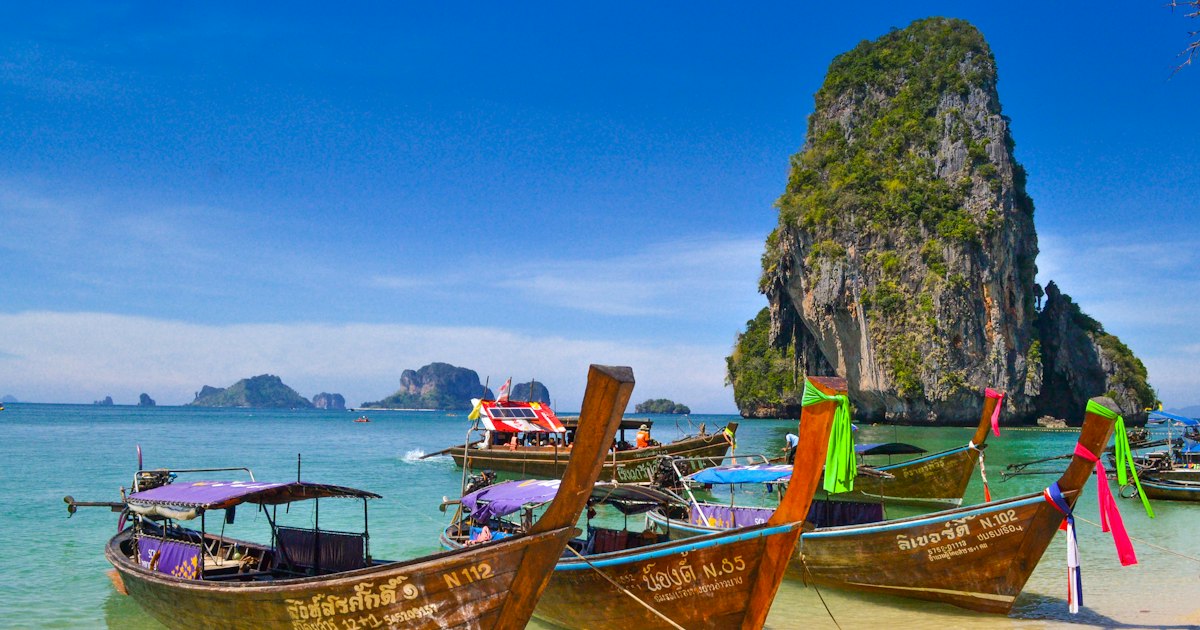
- Krabi (Railay) - Best for rock climbers and couples, reached only by boat.
- Koh Yao Noi - Best for travelers who want local village life and almost no crowds.
- Koh Chang - Best for visitors near the Cambodian border wanting jungle and beaches.
- Similan Islands - Best for serious divers, open only in the dry season.
This range is why Thailand stays so popular. Malaysia, China, and India were the three largest sources of visitors in 2025 (Nation Thailand, January 2026), and many arrive specifically for these beaches.
Getting There by Ferry and Speedboat
Most Thai islands are reached by ferry or speedboat from mainland piers, often after a short flight or minivan ride. The choice between the two boat types shapes your budget, your travel time, and how rough the ride feels.
Speedboats are fast and reach small islands directly, but they cost more and bounce hard in choppy water. Large passenger ferries are slower and cheaper, and they handle waves far better, which matters if you get seasick. For longer crossings, such as the Gulf route to Koh Tao, the big ferry is usually the more comfortable call.
A common route pattern looks like this: fly into Phuket or Krabi, then take a speedboat to Phi Phi; or fly into Surat Thani or Koh Samui, then catch a ferry onward to Koh Phangan or Koh Tao. Booking a combined ticket that links the flight, transfer van, and boat removes the stress of connecting each leg yourself.
Transfers on the mainland can trip up new arrivals, especially taxi pricing. Our comparison of Grab versus taxi in Thailand explains which is cheaper for pier runs, and the The-essential-thailand-guide app checks fair prices so you are not overcharged on the way to the dock.
When to Visit Each Coast
The Andaman coast is best from November to April, and the Gulf coast is best from May to September, because the two sides have opposite rainy seasons. Understanding this split is the single most useful piece of Thai island planning.
The Andaman coast, which includes Phuket, Phi Phi, Krabi, and Koh Lanta, gets its heaviest rain and biggest waves during the southwest monsoon from roughly May to October. Ferries to the Similan Islands stop entirely for much of that window. From November through April, the seas calm down and the water clears, which is why this is peak diving and beach season.
The Gulf coast, home to Koh Samui, Koh Phangan, and Koh Tao, runs on a different calendar. It stays comparatively dry through the middle of the year and sees its wettest spell later, around October to December. So when the west coast is stormy in the summer, the Gulf islands are often the better bet.
The practical takeaway is reassuring: there is almost always one coast in good condition. If your dates are fixed, pick the coast that suits the season rather than forcing a stormy island. For a wider view of national weather patterns, see the regional weather authority, the Thai Meteorological Department, which publishes official monsoon and rainfall outlooks.
How to Combine Islands in One Trip
The easiest multi-island trips stay on one coast, because neighboring islands share ferry networks and sit close together. Hopping between coasts is possible but eats a full travel day, so plan it only if you have more than a week.
On the Andaman side, a classic loop runs Phuket to Phi Phi to Krabi, with the Railay climbing beaches as an easy add-on. On the Gulf side, the natural chain is Koh Samui to Koh Phangan to Koh Tao, all linked by frequent ferries. Either route gives you variety without long transfers.
If you want both coasts in one holiday, split the trip in two. Spend the first half on one coast, then connect through Surat Thani or back through Bangkok to reach the other. Ten days is a comfortable minimum for a two-coast plan; less than that and you will spend too much time in transit.
Whichever route you build, a connected phone keeps ferry bookings, maps, and translation working between islands. Our Thailand eSIM and SIM card guide for tourists explains how to stay online cheaply, so you can check the next boat time from the beach.
Start With the Season, Then Pick Your Island
Your next step is simple: look at your travel dates first, decide which coast is in its dry season, and only then choose islands from that side of the country. That one habit prevents the most common island-trip disappointment, which is landing in the middle of a monsoon with cancelled boats.
Once you have your dates and coast, download the The-essential-thailand-guide app before you fly. It handles the on-the-ground gaps this guide cannot, from translating ferry announcements to flagging taxi scams, so your island plan survives contact with the real trip.
Frequently asked questions
Which is the best island in Thailand for first-time visitors?
Phuket is the easiest starting point. It has its own airport, hospitals, a wide range of hotels, and short boat trips to Phi Phi and Krabi, so first-timers get convenience without giving up scenery.
What is the best island in Thailand for families?
Koh Samui and Phuket suit families best. Both have direct flights, calm resort beaches, clinics, and plenty of restaurants. Koh Lanta is a quieter family option with long, shallow beaches that are good for young children.
When is the best time to visit the Thai islands?
Visit the Andaman coast (Phuket, Phi Phi, Krabi) from November to April for calm seas. Visit the Gulf coast (Samui, Phangan, Tao) from May to September. The two coasts have opposite rainy seasons.
How do you get between the islands in Thailand?
Most trips use ferries or speedboats from mainland piers, often combined with a short flight or minivan transfer. Speedboats are faster but pricier and rougher; large ferries are slower, cheaper, and steadier in choppy water.
Can you visit several Thai islands in one trip?
Yes. The simplest routes stay on one coast, such as Phuket to Phi Phi to Krabi, or Koh Samui to Koh Phangan to Koh Tao, because those islands share ferry networks and sit close together.