Getting Around Bangkok: BTS, MRT, and Boats Explained
Key takeaways
- The BTS Skytrain and MRT subway are the fastest way across central Bangkok, and they connect at several interchange stations like Asok and Siam.
- BTS single journeys use a low distance-based fare, and a One-Day Pass offers unlimited Skytrain rides if you plan several trips.
- Bangkok ranked among the world's most congested cities, with drivers losing 115 hours a year to traffic (TomTom Traffic Index, 2025 data).
- Chao Phraya Express Boats are cheap and scenic, with flag-coded routes costing roughly 16 to 35 THB depending on color and distance.
- Combine rail for long hops with boats or short walks near the river to skip Bangkok's worst road traffic entirely.
Getting around Bangkok with the BTS and MRT is simple once you know the system: ride the elevated Skytrain and the underground subway for fast trips across the center, then switch to river boats near the Chao Phraya for the old city and the big temples. Together these three networks let you skip most of Bangkok's road traffic, which is some of the heaviest on earth.
That last point is not an exaggeration. Bangkok ranked among the world's most congested cities in 2025, with the average driver losing 115 hours a year to traffic and crawling along at just 20.9 km/h during rush hour (TomTom Traffic Index, 2025 data). The trains and boats float above and alongside all of that, so a 45-minute taxi ride can shrink to 15 minutes on the rails.
How the Skytrain and Subway Connect the City
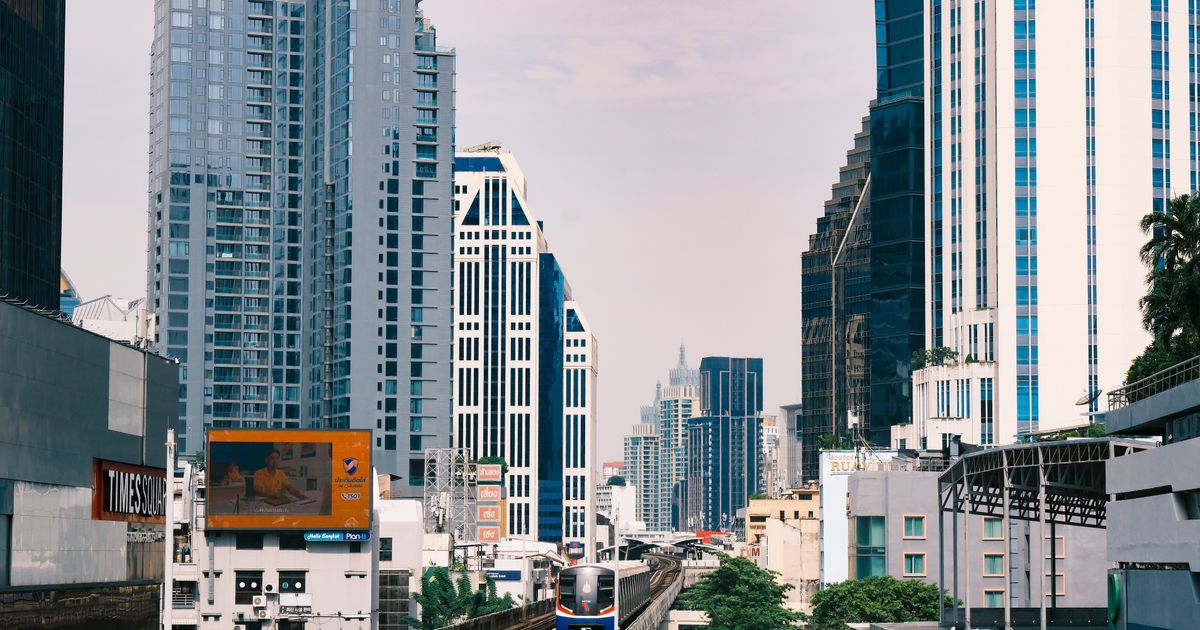
The BTS Skytrain and MRT subway form the backbone of fast travel in central Bangkok, and they meet at several interchange stations where you can swap lines in a few minutes. The BTS runs on elevated tracks above the main roads, while the MRT runs underground, so between them they reach nearly every area a visitor cares about.
The BTS has two main lines, the Sukhumvit Line and the Silom Line, plus the short Gold Line. They cross at Siam station, the busiest hub, which sits right next to the big shopping malls. The MRT Blue Line loops through Chinatown, the old city, and the main train station, and it links to the BTS at stations like Asok, Sala Daeng, and Chatuchak.
Why does this matter for your day? Because most trips combine both systems. You might ride the BTS from your Sukhumvit hotel to Asok, tap onto the MRT, and come up near a temple without ever touching a road. Trains run roughly every three to six minutes from early morning until around midnight.
The Airport Rail Link into town also plugs into this network, meeting the BTS and MRT at its city-end stations, so you can land and keep moving on the rails without a taxi.
How Do You Buy Tickets and Travel Passes?
Buying a ticket is quick, and BTS single journeys run on a low distance-based fare, with a One-Day Pass available for unlimited Skytrain rides. The right choice depends on how many trips you plan to take and whether you want to carry a reusable card.
For single rides on the BTS, use the touchscreen machines at every station. Pick your destination, feed in coins or small notes, and collect a token. The MRT works the same way but issues a round black token you tap and then drop in a slot at the exit.
If you plan several train days, a stored-value card saves time. The Rabbit Card works across the BTS and loads with cash at any station counter. Keep your passport handy, since foreigners now need to show ID to buy one. A separate stored-value card covers the MRT, though there is a faster option below.
Here is a useful shortcut: you can tap a contactless Visa or Mastercard directly on the MRT, the Yellow and Pink monorails, and the Airport Rail Link. The BTS does not accept bank cards, so the Skytrain still needs a token or a Rabbit Card. Keep a little cash on hand for the token machines, which prefer coins and small notes.
River and Canal Boat Routes
The Chao Phraya River is Bangkok's original highway, and its boats remain the cheapest, most scenic way to reach the old city. The Chao Phraya Express Boats charge low flag-coded fares, from 18 THB on the orange line to 23 THB on the yellow line, with the green-yellow line running 16 to 35 THB by distance (Thai PBS World, 2026).
The flag on the front of each boat tells you the route. Orange-flag boats stop most often and suit sightseers heading to Wat Arun, the Grand Palace, or the flower market. Yellow and green-yellow flags skip minor piers for faster commuter runs. There is also a dedicated blue-flag tourist boat with English announcements and a hop-on day pass.
To reach the river from the rail network, ride the BTS Silom Line to Saphan Taksin station, which sits right at Sathorn pier, the main boat hub. From there you can float upstream past temples and markets while the roads above you sit gridlocked.
Smaller canal boats, called khlong boats, run along Saen Saep canal and cut east to west through the city center. They are faster than they look and handy for reaching the Golden Mount area, though they splash and move quickly, so hold the rope guard when boarding.
How Do You Combine Transit to Beat the Traffic?
The trick to beating Bangkok traffic is to treat rail, boats, and short walks as one connected system rather than picking a single mode. With TomTom measuring congestion at 67.9% and rush-hour speeds near 20.9 km/h in its 2025 data, staying off the roads during peak hours is the single biggest time saver.
A practical pattern looks like this. Use the BTS or MRT for long crosstown hops, since trains ignore traffic entirely. Switch to a boat when your destination sits near the river. Then walk the final stretch, because Bangkok's last-mile roads are often the slowest part of any journey.
Save taxis and ride-hailing for trips that no train or boat reaches, or for late nights after the trains stop. If you do take a car, build in extra time during the morning and evening peaks, because that is exactly when the roads slow to a crawl.
One more habit pays off: check which exit your station uses before you surface. Many BTS and MRT stations have four or more exits spread across a large intersection, and choosing the right one can save a hot ten-minute walk back around the block.
Which Apps Map Your Route in English?
Google Maps is the most reliable free app for planning Bangkok transit in English, and it handles BTS, MRT, bus, and walking directions in one search. Type your destination, pick the transit tab, and it shows the right line, the fare estimate, and the platform direction.
For the river, the dedicated tourist boat operator posts English timetables, and station maps inside every BTS and MRT stop are bilingual. Offline, download the Bangkok map area in Google Maps before you head out, so a weak signal underground does not strand you.
Mapping apps get you from A to B, but they do not warn you about a rigged taxi meter, read a handwritten Thai menu, or tell you a fair price at the pier. That is where a travel companion like The Essential Thailand Guide helps, pairing route help with live translation, price checks, and scam alerts in one place. If you want a wider list of tools to install first, our roundup of the best Thailand travel apps to download before your trip covers the essentials.
Before your first ride, load a transit app, set your language to English, and screenshot the station nearest your hotel. With the Skytrain, subway, and boats mapped out, you can cross Bangkok in minutes while the traffic below stands still.
Frequently asked questions
Is the BTS or MRT better for tourists in Bangkok?
Both are excellent. The BTS Skytrain covers shopping and nightlife areas like Siam and Sukhumvit, while the MRT reaches Chinatown, the old city, and Hua Lamphong. Most visitors use both and switch at interchange stations such as Asok or Sala Daeng.
How much does it cost to ride the BTS Skytrain?
BTS single journeys use a low distance-based fare, so longer trips cost a little more than short ones. A One-Day Pass gives unlimited BTS rides and usually pays off once you take four or more trips in a single day.
Can I use a contactless credit card on Bangkok trains?
You can tap a contactless Visa or Mastercard on the MRT, the Yellow and Pink monorails, and the Airport Rail Link. The BTS does not accept contactless bank cards, so you need a Rabbit Card or a single-journey token for the Skytrain.
Are the Chao Phraya boats safe and easy for tourists?
Yes. The Chao Phraya Express Boats run frequently in daylight hours and stop near major sights like Wat Arun and the Grand Palace. Flag colors mark each route, and fares are low, roughly 16 to 35 THB depending on the line and distance.
Which app is best for planning Bangkok transit in English?
Google Maps handles BTS, MRT, and bus directions well in English. For live fares, scam warnings, and Thai phrase help on the move, a dedicated companion like The Essential Thailand Guide fills the gaps that mapping apps leave out.