Thai Street Food Guide: What to Eat and How to Order
Key takeaways
- Start with pad thai, moo ping, som tum, and mango sticky rice, then branch out to boat noodles and khao man gai once you know what you like.
- Pick stalls with long local queues and food cooked to order in front of you, which is the simplest signal of freshness and turnover.
- Thai medium spice is hotter than most visitors expect, so order with 'phet nit noi' (a little spicy) or 'mai phet' (not spicy) at first.
- Most single street dishes cost far less than a sit-down restaurant, and you can eat well all day on a modest budget.
- Point your phone camera at a Thai-only menu to translate it instantly, which removes the guesswork at stalls with no English.
The fastest way to eat well in Thailand is to walk up to a busy stall, point at what someone local just ordered, and say "nueng" (one). This Thai street food guide shows you which dishes to try first, how to spot a stall worth queuing for, how to dial in the spice level, what to expect to pay, and how to read a menu that has no English on it at all.
Street food is the heart of everyday eating here. Vendors specialize in one or two dishes and cook them hundreds of times a day, so the quality at a good stall often beats a restaurant charging several times more.
Must-try dishes in this Thai street food guide, from pad thai to mango sticky rice
Begin with the classics, then explore. These are the dishes you will see most often and the easiest ones to order by sight.
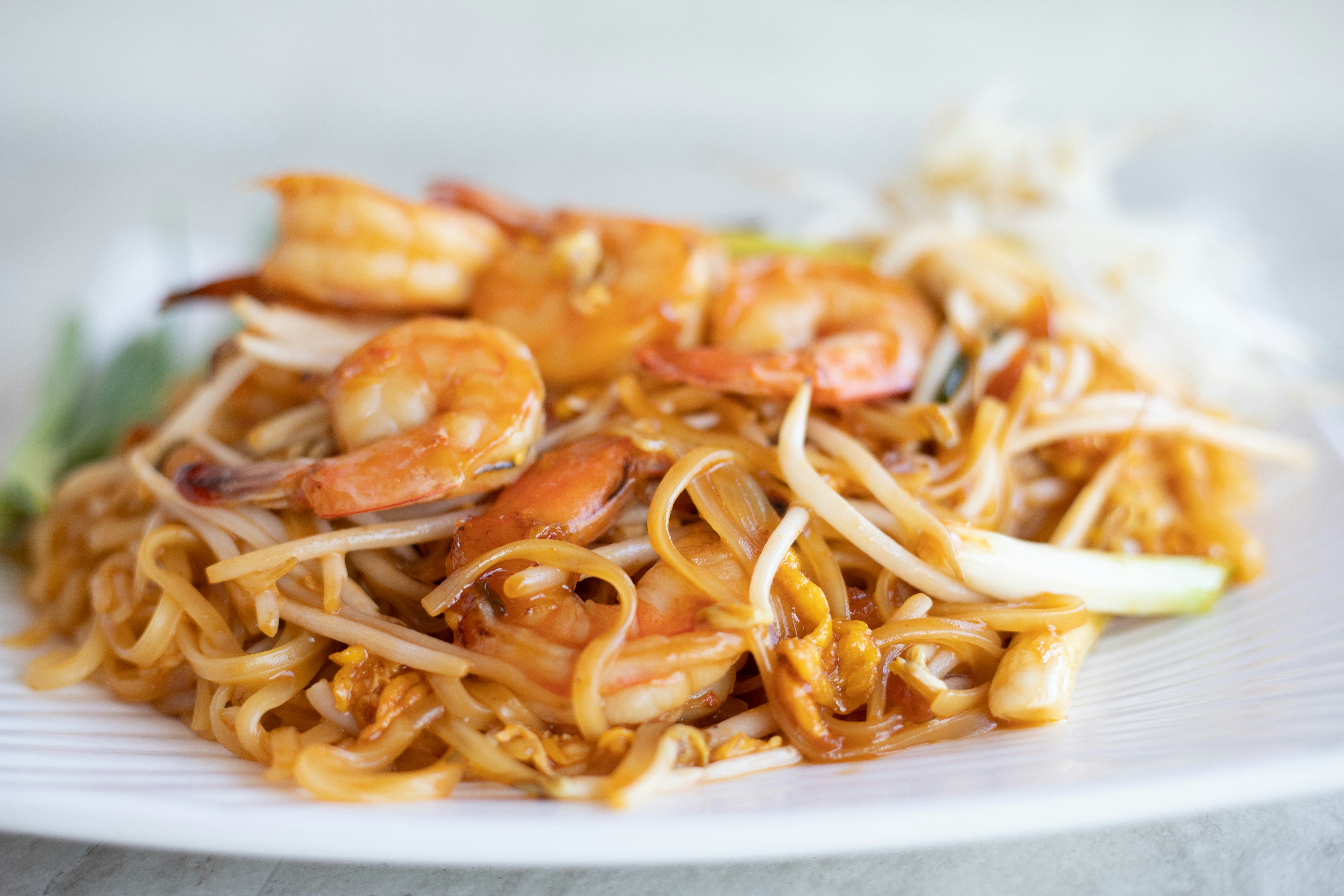
- Pad thai: stir-fried rice noodles with egg, tofu or shrimp, bean sprouts, and crushed peanuts. Squeeze the lime, add a pinch of chili flakes, and you are set.
- Moo ping: charcoal-grilled pork skewers, usually sold with a bag of sticky rice. A perfect walking breakfast.
- Som tum: green papaya salad pounded in a mortar with lime, fish sauce, and chili. Fresh, sour, and fiery.
- Khao man gai: poached chicken over rice cooked in chicken stock, served with a sharp ginger-chili sauce. Mild and comforting.
- Boat noodles: small, intense bowls of dark, spiced broth with pork or beef. Cheap enough that locals order several at once.
- Mango sticky rice: ripe mango with coconut-soaked sticky rice. The dessert everyone remembers.
Bangkok's street cooking is taken seriously at the highest level, too. The Michelin Guide recognizes a long list of modest, reasonably priced eateries across Thailand each year, and one Bangkok street stall has even held a Michelin star, proof that "street food" and "world class" are not separate categories here.
How to spot a clean, busy stall
The best filter is the queue. A stall with a steady line of local customers turns over ingredients quickly, which means nothing sits around long enough to spoil. Follow the crowd before you follow the signage.
Beyond the line, look for food cooked to order in front of you. High heat and quick cooking are your friends. The World Health Organization's food-safety guidance stresses thorough cooking and keeping cooked food out of the lukewarm temperature range where bacteria multiply, which is exactly what a sizzling wok or charcoal grill delivers. In practice that means a few simple checks:
- Food is sizzling, grilling, or boiling as you watch, not sitting in a tray going cold.
- The vendor handles money and food with some separation, such as tongs or a helper on the cash.
- The stall is busy, so each batch is fresh.
- Fruit and raw salads are prepared on the spot, not pre-cut hours earlier.
Trust your eyes and your nose. If a stall is empty at a busy hour while the one next door has a line, there is usually a reason.
Ordering spice levels and common requests
Thai spice tolerance runs high, and "medium" from a street vendor can overwhelm visitors who are not used to it. Start milder than you think you need and work up on your next order.
A few phrases go a long way. Add the polite particle "khrap" if you are a man or "kha" if you are a woman at the end of a request.
- Mai phet (not spicy)
- Phet nit noi (a little spicy)
- Phet (spicy, which is already hot by most standards)
- Phet mak (very spicy)
One honest caveat: some dishes, like som tum, are built around chili, so "mai phet" may reduce the heat rather than remove it entirely. If you truly cannot handle chili, point to a milder dish like khao man gai instead. For the full set of mealtime basics, our essential Thai phrases every traveler should know covers greetings, numbers, and polite requests you will use at every stall.
Other useful requests: "mai sai nam tan" (no sugar) for drinks, and "sai thung" (in a bag) if you want your food to go, which is how much of the city eats.
Average street food prices
Street food is one of the best values in travel. A single plate or bowl typically costs a small fraction of a restaurant main, and skewers and snacks run cheaper still. A rough picture for a visitor in 2026:
- A classic plate like pad thai or a bowl of noodles sits at the low end of a casual meal budget, with tourist-zone stalls charging noticeably more than neighborhood ones.
- Grilled skewers, fruit, and small snacks are pocket change, often bought a few at a time.
- Even premium, famous stalls that draw long queues stay affordable by Western standards.
You can comfortably eat three street meals a day plus snacks on a modest daily food budget, which is why so many travelers build whole trips around it. Prices have crept up over the past decade, and tourist hotspots carry a markup, so walking one street back from the main drag usually saves money. For a full trip breakdown, see our guide on how much a trip to Thailand costs in 2026.
A quick note on paying: most stalls are cash only, and vendors rarely haggle on food the way market sellers do on goods. The price is the price.
Using an app to translate menus on the spot
Plenty of the best stalls have menus written only in Thai script, with no pictures and no English. This is where a phone earns its keep. Point your camera at the menu and a translation app overlays English in real time, so you can read "moo" (pork), "gai" (chicken), and "goong" (shrimp) without memorizing the alphabet.
The The-essential-thailand-guide app is built for exactly this moment. It translates Thai menus and signs through your camera, checks whether a price looks fair for the area, and flags common tourist scams, so you can order with confidence at a stall that has never seen a tourist. Keeping it open while you browse a night market turns a wall of unfamiliar script into a readable list of dishes and prices.
Whatever tool you use, download it and test it before you land, and make sure you have mobile data so camera translation works away from wifi.
Where to start tonight
Skip the research spiral and just go. Find the busiest stall on the street at dinnertime, order one pad thai with "phet nit noi," and buy a bag of mango sticky rice from the vendor next door for dessert. Open your translation app for anything written only in Thai, pay in cash, and let the queue guide your next pick. That single loop, busy stall, cooked to order, mild spice, repeat, is all you need to eat your way across Thailand.
Frequently asked questions
Is Thai street food safe to eat?
Street food is generally safe when you choose busy stalls that cook to order over high heat. Freshly cooked, piping-hot food and high customer turnover are the two signals that matter most.
How do I order food that is not spicy in Thai?
Say 'mai phet' for not spicy or 'phet nit noi' for a little spicy. Add 'khrap' if you are male or 'kha' if you are female to be polite.
How much should I budget for street food in Thailand?
A single street dish usually costs a small fraction of a restaurant meal, and three street meals a day fit a modest daily food budget comfortably.
Can I read a Thai-only menu with no English?
Yes. Use a camera translation app or the The-essential-thailand-guide app to point your phone at the menu and read a live English overlay on the spot.