Thailand Temple Etiquette: What to Wear and Do
Key takeaways
- Cover your shoulders and knees at every temple; sleeveless tops, shorts, and short skirts are refused at the door.
- Remove your shoes before entering any ordination hall or chapel, and take off hats and sunglasses inside.
- Women must never touch a monk or hand him an object directly; place items on a cloth or nearby surface instead.
- Never turn your back to a Buddha image for a selfie, and do not photograph from a point higher than the statue.
- The Grand Palace enforces dress rules strictly, and its entry fee is not refunded if you are turned away.
Cover your shoulders and knees, slip off your shoes before you step inside, and keep your behavior quiet and respectful around monks and Buddha images. Those three habits carry you through almost any visit, and the rest of Thailand temple etiquette builds on them.
Temples are living places of worship, not just photo stops. In 2025, Thailand welcomed 32,974,321 foreign tourists (Nation Thailand, 2026), and many of them pass through sites like Wat Phra Kaew and Wat Arun every day. A little preparation keeps you from getting turned away at the gate or causing unintended offense.
What Is the Dress Code for Thai Temples and Sacred Sites?
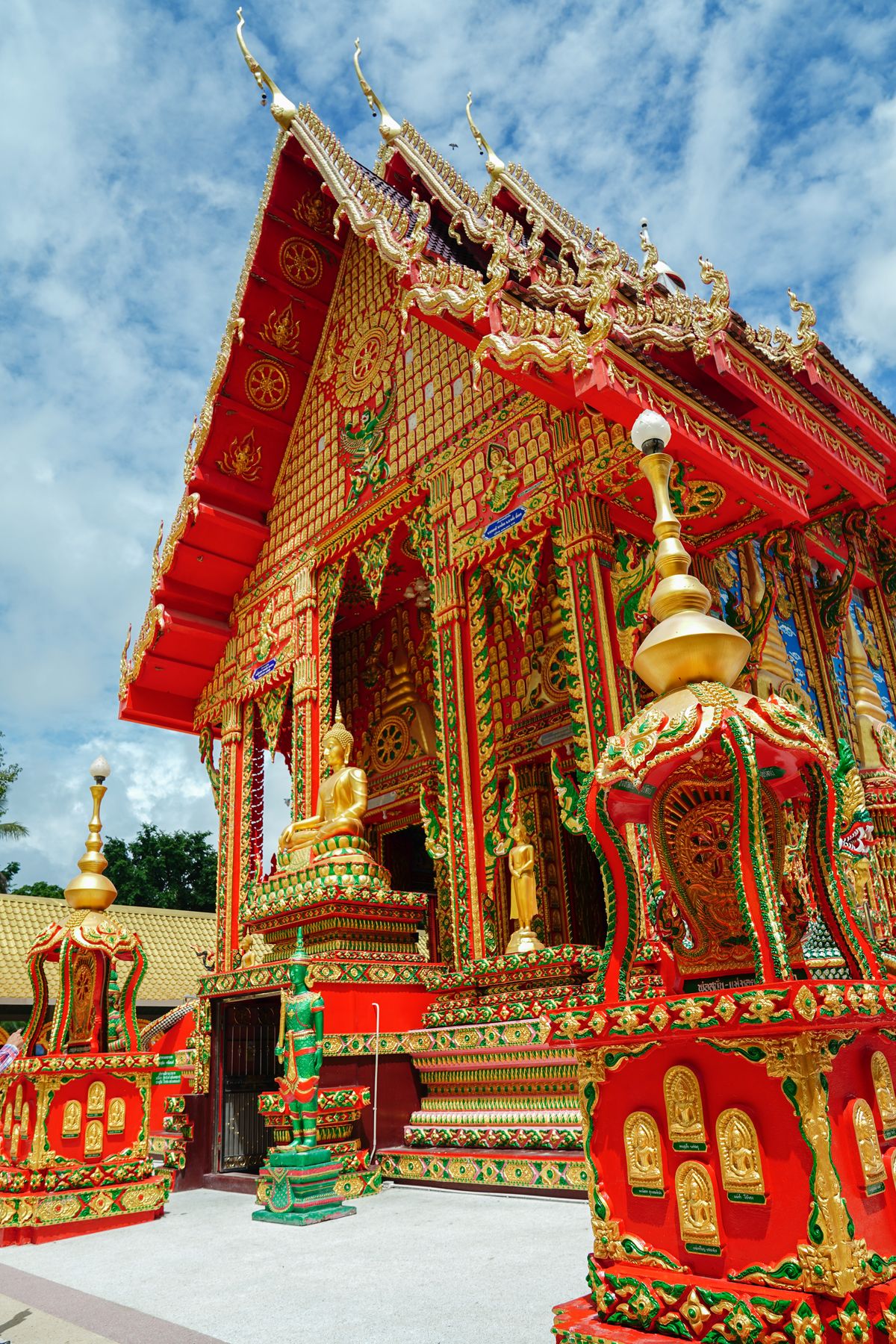
The rule is short: shoulders and knees stay covered the whole time you are on temple grounds. This applies to men and women equally. Thailand is home to 44,195 Buddhist temples as of March 2025 (National Office of Buddhism, via Wikipedia, 2025), and the dress expectation is consistent across almost all of them.
Leave the tank tops, shorts, mini-skirts, ripped jeans, and see-through fabric at the hotel. Leggings worn on their own usually will not pass either. A sleeved T-shirt or blouse with long trousers or a maxi skirt is the safe combination.
If you forget, markets near most temples sell Thai fisherman's pants for around 100 to 150 baht. They are light, breathe well in the heat, and solve the problem in seconds.
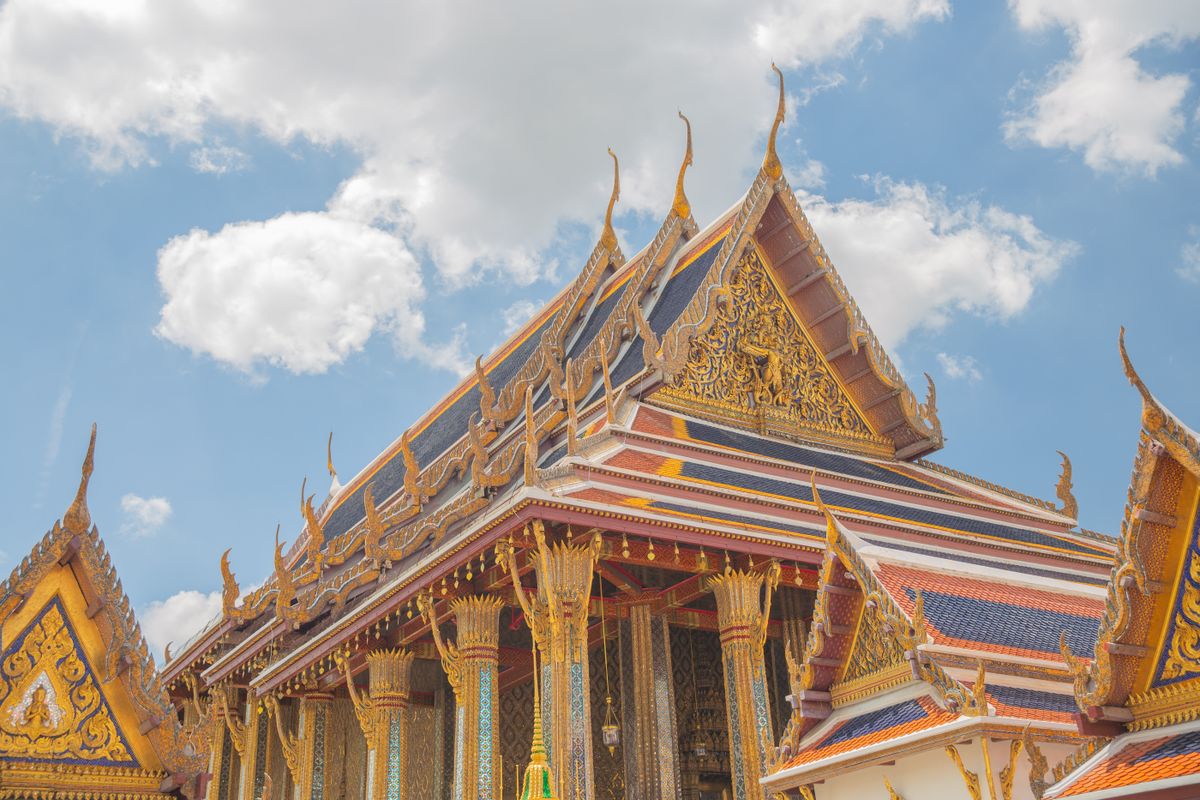
The Grand Palace and its Wat Phra Kaew enforce the code more firmly than anywhere else. A scarf draped over bare shoulders is not accepted here; staff want to see a real sleeved shirt. You can rent a cover-up on site, but the entry fee is not refunded if you are sent away, so dress right before you arrive. Planning your spending for the trip? Our guide on how much a trip to Thailand costs in 2026 breaks down fees like these.
Why Do You Remove Your Shoes, and How Should You Behave?
Shoes come off before you enter any ordination hall, chapel, or main worship building. The custom keeps the sacred space clean and shows humility. You will usually spot a shoe rack or a tidy row of other visitors' footwear marking where to stop.
Take off your hat and sunglasses inside worship buildings too. Keep your voice low. Loud talking, laughing, and phone calls break the calm that worshippers come for.
One detail trips up many first-time visitors: your feet. In Thai culture, feet are the lowest and least clean part of the body. Never point them toward a Buddha image, an altar, or a monk. When you sit, tuck your feet behind you in the "mermaid" position rather than crossing your legs toward the front.
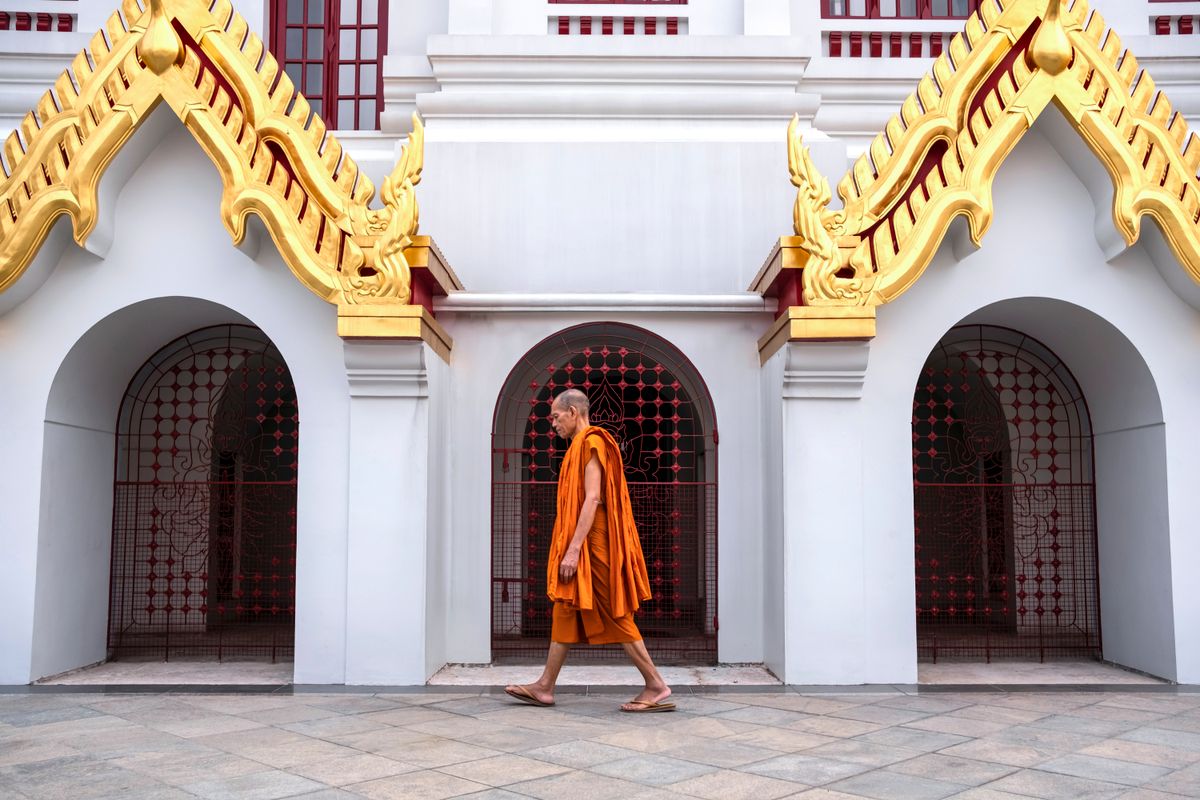
With more than 200,000 monks living in Thailand's monastic community (BuddhaNet, retrieved 2026-10-12), you will likely share walkways with them. Step aside and let them pass; they have the right of way.
How Should You Interact With Monks and Buddha Images?
Treat monks and Buddha images as the highest presence in the room, and keep yourself physically lower than both. Around 92 to 95 percent of Thailand's population is Buddhist (Tricycle, retrieved 2026-10-12), so these images are central to daily life, not museum pieces.
Women follow one firm rule. Never touch a monk or hand an object straight into his hands. Place whatever you are giving on a cloth, a table, or another surface so the monk can pick it up himself. Men can hand items directly.
Never sit higher than a monk or a Buddha statue. Do not climb on statues, touch a Buddha's head, or treat any image casually. A Buddha tattoo or a photo that mocks an image can cause real offense and has led to travelers being refused entry or fined in the past.
If you want to greet a monk, a small bow with palms pressed together, the wai, is welcome. Learning a few polite words helps too, and our list of essential Thai phrases for travelers covers the greetings worth memorizing.
What Are the Photography Dos and Don'ts?
Photography is often allowed, but it comes with limits that protect the sanctity of the image. The simplest rule: never pose with your back to a Buddha statue. Turning your back for a selfie is read as a clear insult.
Do not shoot from a position higher than the Buddha image. Crouch or stand level rather than raising your camera above it. Flash is frequently banned inside chapels because it can damage old murals and disturb worshippers, and some ordination halls prohibit photos altogether. Watch for posted signs and follow them.
Ask before photographing people at prayer or monks going about their day. A quiet gesture toward your camera and a nod is usually enough. If someone declines, respect it and move on.
Where Does Thailand Temple Etiquette Trip Tourists Up Most?
Most missteps come from habit rather than disrespect, and they are easy to avoid once you know them. The frequent ones are sitting with feet pointed at an altar, turning your back to a Buddha for a photo, and arriving in shorts or a tank top.
Other avoidable errors include:
- Touching or climbing on Buddha statues
- Public displays of affection on temple grounds
- Speaking loudly or laughing near worshippers
- Wearing shoes into a chapel
- Handing objects directly to a monk as a woman
Scammers sometimes exploit confusion near big temples, for example by claiming a site is "closed today" to redirect you to a shop. Our guide to common Thailand tourist scams and how to avoid them explains the temple-related versions.
When you are unsure about a specific site's rules, a quick check beats a guess. The-essential-thailand-guide app flags the dress code and photography limits for the temple you are standing in front of, translates signs posted in Thai, and warns you about nearby scams, so you can walk in confident rather than cautious.
Respect at a Thai temple comes down to attention: dress a little more covered than you think you need, watch what longtime visitors do, and move slowly. Before your next temple day, set out tomorrow's outfit the night before with sleeves and long legs ready, and keep a light scarf in your bag for any site that asks for more.
Frequently asked questions
What should I wear to a temple in Thailand?
Wear clothing that covers your shoulders and knees. Long trousers or a maxi skirt with a sleeved top works well. Avoid tank tops, shorts, ripped jeans, and see-through fabric.
Do I have to take my shoes off at Thai temples?
Yes. Remove your shoes before entering any ordination hall, chapel, or worship building. Many temples mark the spot with a shoe rack or a line of other visitors' footwear.
Can women talk to or touch monks in Thailand?
Women can speak with monks but must never touch them or hand an object directly. Place the item on a cloth or surface so the monk can pick it up himself.
Is photography allowed inside Thai temples?
Often yes, but with limits. Avoid flash, do not shoot from higher than the Buddha image, and never pose with your back to a Buddha statue. Some chapels ban photos entirely.
What is the strictest temple for dress code in Bangkok?
The Grand Palace and Wat Phra Kaew enforce the dress code most firmly. A shawl over bare shoulders is not accepted; you need a proper sleeved shirt and long trousers or skirt.